
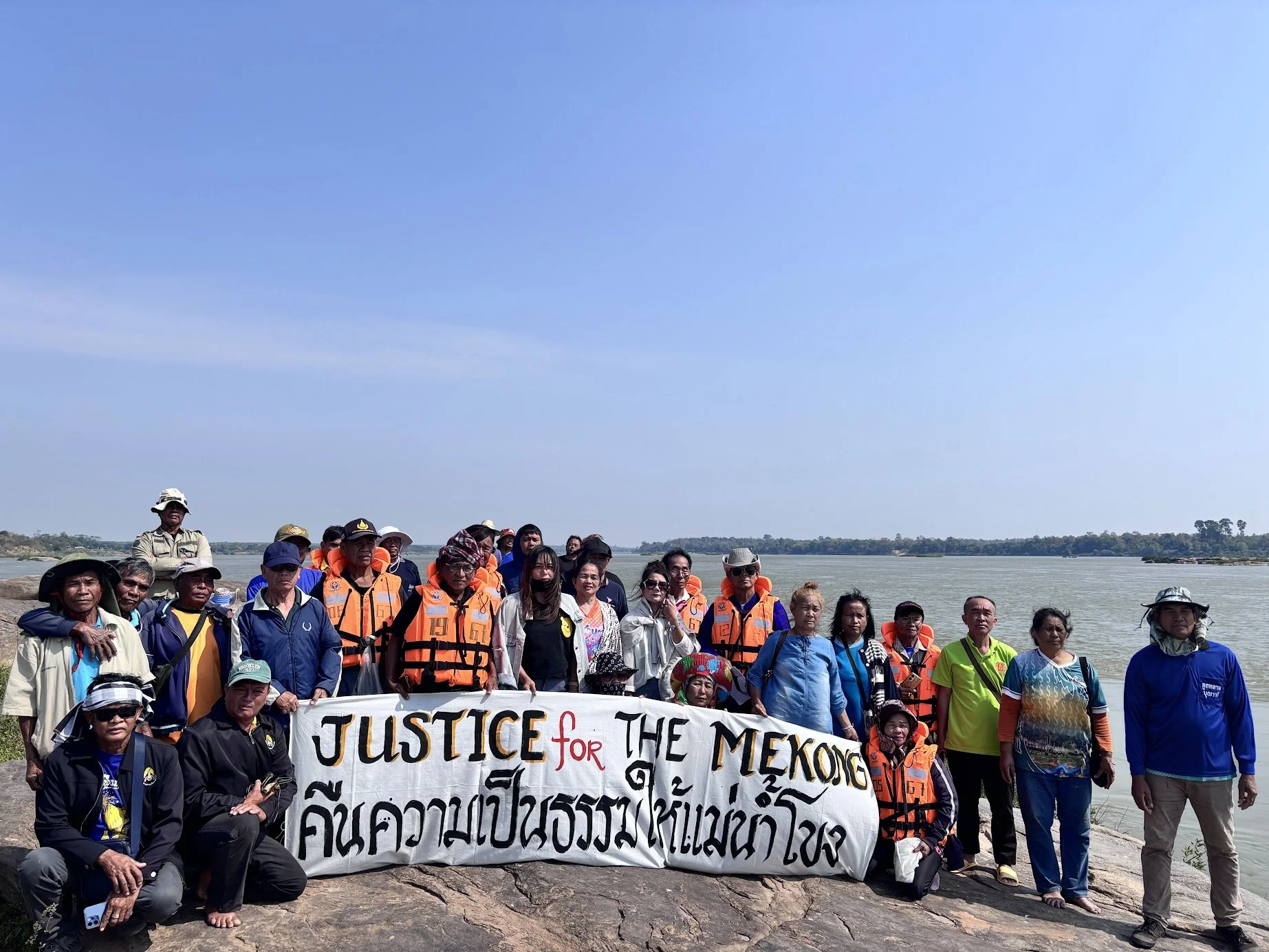
For several decades, the Mekong River, the lifeblood of the people in the region, has been severely impacted by increasingly large-scale development projects, including hydropower dams on the mainstream river and its tributaries, as well as mining in the upper part of the river basin. These developments are transforming the free-flowing river into a large reservoir, contaminated with toxins and heavy metals from unregulated mining, before it flows across borders.
The Mekong River is the source of life, culture, and the relationship between people and nature. It is an ecosystem that has sustained food, livelihoods, and shared memories for generations. Changes to the river from dam construction have distorted the water's natural rhythm, causing seasonal floods and droughts to be out of sync. This has rapidly led to the deterioration of riparian vegetation, aquatic life, forests, fish, wetlands, and the traditional livelihoods of the communities.
At the same time, the threat from mining in the Mekong Basin is exacerbating the problem, particularly with the extraction of critical minerals and other minerals that supply the energy, technology, and military industries. These mining operations release toxins, heavy metals, and various chemicals into the water system. Many communities suffer from this situation. In addition to spreading into the ecosystem, toxins accumulate in both water and sediment, infiltrate to health, aquatic animals, and agriculture, ultimately circulating in the food chain for many generations to come.
Currently, the impact of hydropower dams and mines is causing the Mekong River, which connects millions of lives across multiple countries, to become a toxic river that does not stop at any one country's border but extends throughout the entire basin. Such damage cannot be easily restored, and in some cases, cannot be reversed to its original state at all.
The people in the Mekong Basin are therefore facing threats that are not the result of their own decisions. Many hydropower projects are developed through cross-border investment and are tied to long-term power purchase agreements, while large-scale mining projects are linked to global industrial supply chains. These developments occur without the genuine participation of the affected communities.
Under the UN Guiding Principles on Business and Human Rights, the State has a duty to protect its people from the adverse human rights impacts of business activities, including those of enterprises in which the State invests or is involved, whether they occur domestically or across borders. Purchasing electricity from hydropower dam projects or engaging in any development project must consider the responsibility throughout the supply chain and must not violate the rights of people or harm the ecosystems.
On the International Day of Action for Rivers, the Mekong People's Network declares its stance that:
The Mekong River must not be further destroyed by hydropower dam projects or mining activities that pollute the river and living organisms in the Mekong Basin. Any development that neglects human rights, community rights, and the integrity of the ecosystem cannot be considered sustainable development and must not be repeated.
We call upon the Royal Thai Government, the governments in the Mekong River countries, energy companies, lenders, investors, and all relevant agencies to:
1. Cancel the new hydropower dam project on the Mekong River and its tributaries.
2. Seriously inspect and control cross-border pollution-causing mining activities.
3. Disclose environmental and health information to the public transparently.
4. Be responsible for all impacts on communities and the ecosystem.
5. Respect the rights of the people to participate in decisions concerning the future of the river upon which we depend.
The people of the Mekong River basin affirm our right to clean water, safe food, and a rich environment in our homeland. We do not want the development that destroys the river, forests, fish, and livelihoods, and we will stand together to protect the Mekong River to flow freely.
Protecting the river is a matter of dignity, justice, and the future of our children.
May the Mekong River flow freely and safely, and may environmental justice be achieved for all lives in this basin.
Mekong People's Network from Nakhon Phanom, Mukdahan, Amnat Charoen, Ubon Ratchathani.