
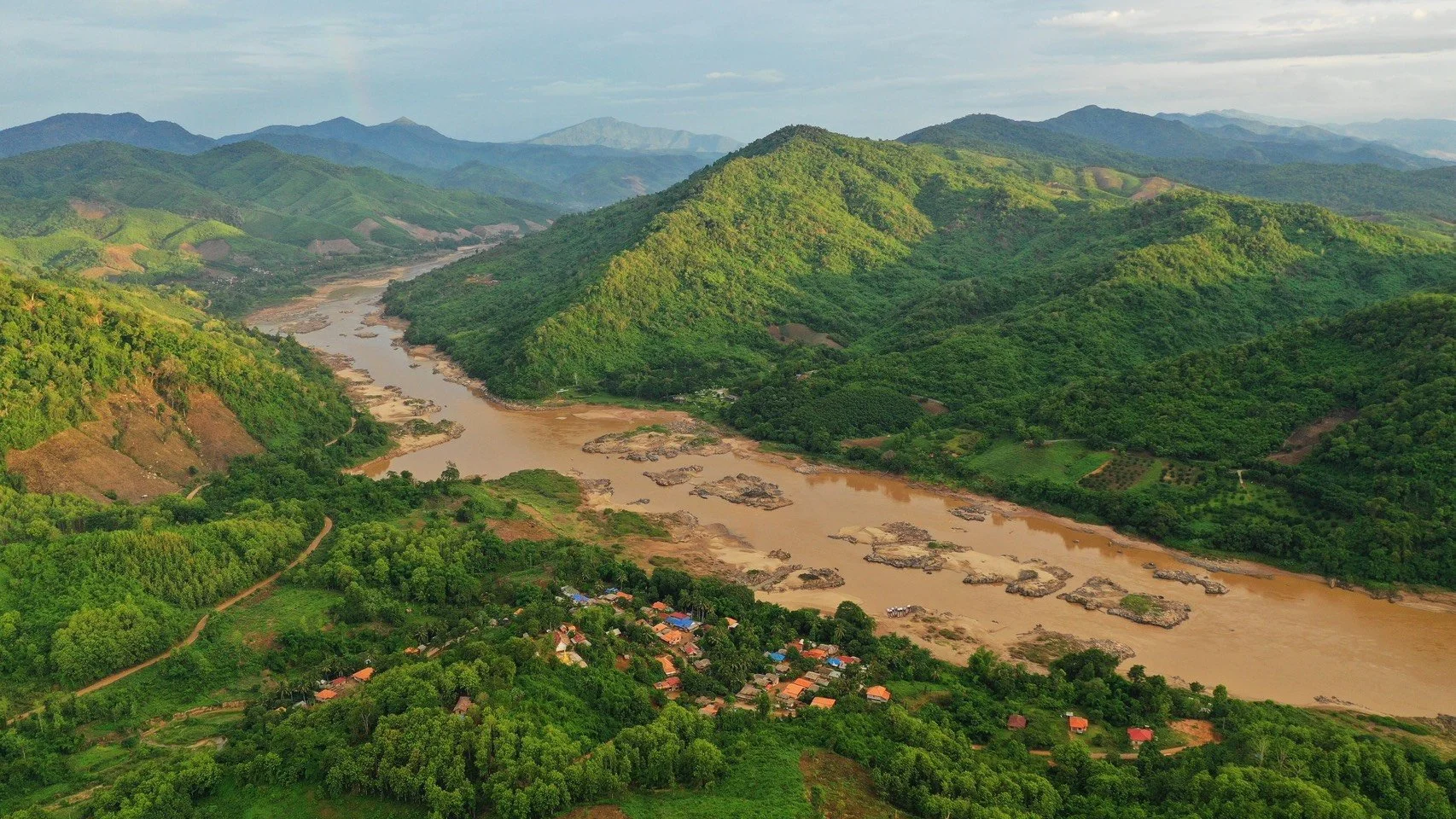
On March 2, 2026, at the Chiang Mai Administrative Court, the Chiang Khong Conservation Group and the Mekong People’s Network, together with Sor. Rattanamanee Polkla and Chalermsri Prasertsri, lawyers from the Community Resource Centre Foundation, filed an appeal against the court’s earlier decision not to accept a lawsuit concerning the Power Purchase Agreement (PPA) for the Pak Beng dam project and heavy metal contamination in the Mekong River.
The Administrative Court had ruled that the PPA is an administrative contract to which the plaintiffs are not parties, and that the lawsuit was based on anticipated damages. The plaintiffs disagreed with the ruling and submitted their appeal today.
Sor Rattanamanee said the appeal is grounded in the Precautionary Principle, a cornerstone of international environmental law, aimed at preventing harm before it occurs. She noted that, in addition to submitting water quality reports from the Pollution Control Department at the time of filing, further contamination has since been detected in both the Kok and Mekong rivers. Additional water quality evidence has now been submitted to demonstrate the potential impacts should the Pak Beng dam be constructed.
The lawyers stated that the lawsuit seeks revocation of the power purchase agreement, arguing that such agreements must carry supply chain responsibility under the UN Guiding Principles on Business and Human Rights (UNGPs), which Thailand has endorsed and incorporated into its National Action Plan. The state has a duty to “protect” by ensuring that state enterprises and related activities do not cause human rights impacts, both domestically and abroad.
“The Administrative Court already recognises the precautionary principle in protecting the rights of affected parties. We see this as the only channel to use the justice system to safeguard natural resources and people. Although the state agency is directly involved only in the power purchase contract, the contract enables the dam project. Therefore, it directly affects the plaintiffs, and the process must ensure meaningful public participation,” the lawyers said.
Pianporn Deetes, executive director of Rivers and, and a co-plaintiff in the case, said the lawsuit seeks judicial review of state authority before adverse and irreversible damage occurs.
“This case is not a private dispute but concerns the public interest in natural resources, the environment, and Mekong communities that may be affected by a project in which the public has had no meaningful participation,” she said.
“The Mekong River ecosystem, once impacted by cumulative heavy metal contamination or severe ecological disruption, is extremely difficult—if not impossible—to restore. Global experience shows a growing shift away from dam construction, as the losses often outweigh the benefits. Accepting this case would not only allow access to justice, but also affirm that environmental protection must be preventive and that standing in environmental cases must be interpreted in line with the public interest,” Pianporn said.
Another plaintiff, Piyanan Jitjang, a Mekong riverside resident from Chiang Khong, said the court should consider not only legal arguments but also the lived realities of affected communities.
“We are not asking the court to look only at numbers or documents. We are asking it to consider people’s lives. The toxins in our bodies and those of our children are evidence that speaks for itself. Justice must come before heavy metals cause further harm,” she said, expressing hope that the court will accept the case and set a new precedent for transboundary environmental protection in the Mekong subregion.
The lawsuit was originally filed with the Chiang Mai Administrative Court in November 2025. On Jan 27, 2026, the court dismissed the case. This appeal has been filed within the 30-day legal timeframe.